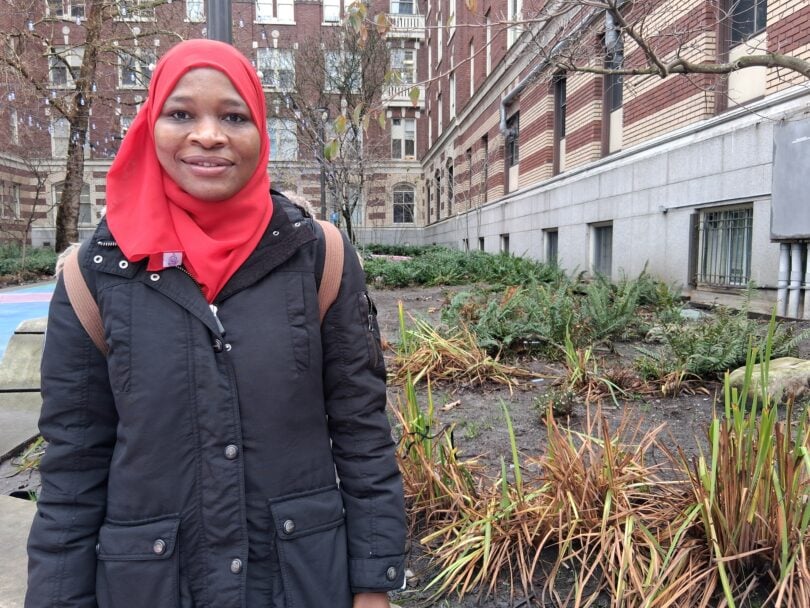
Safe housing helped Zuwena haji Machano heal after her heart transplant.
Before her surgery at St. Paul’s Hospital, Zuwena lived in a crowded house with a dozen people. The space was loud and messy, increased her stress and infection risk. “Life before the hospital was very hard because I was sick, couldn’t work, and had no money,” she says.
Her care team told her she needed a clean home after surgery to stay safe. She didn’t know where she would live.
That changed when the Reaching Home program stepped in.
“When the care team told me I needed a clean place with no infection risk, I felt scared because I didn’t know where I’d go. Reaching Home helped me by paying one month of rent for temporary housing and helped me move there.”
That move changed her recovery. “When they moved me out of the old house into the temporary place, I felt my life was changing for the better. Stable housing gave me peace because I knew I had a clean and safe home where I could rest and avoid infection.”
What Reaching Home does
Reaching Home is a federal program that provides temporary financial assistance to eligible participants. It targets housing problems that block safe hospital discharge and slow recovery.
“The program began with a grant from the federal government that focuses on ending homelessness,” says Teresa Robitaille, Professional Practice Leader, Social Work, at Providence Health Care, which operates St. Paul’s Hospital. In our region, Vancity Community Foundation and LU’ma Native BCH Housing Society help get these funds to people in need. “Our goal is to help people keep their home or find a home when their health puts them at risk of losing it.”
Between June 2024 and December 2025, Reaching Home received 159 referrals. The average participant age was 52, and major referral sources included the John Ruedy Clinic, Road to Recovery, and the Brief Intervention Clinic. Among those reached for follow-up, 79 percent were housed within three months, and nearly all said Reaching Home support was essential to that outcome.
The Reaching Home team works with a small budget that can be applied to temporary housing supports. “We’ve helped about 200 people in the first year and a half,” Robitaille says.
Why housing and health are connected
Robitaille explains it in plain language. “When you don’t have a safe place to live, it’s harder to take care of your health.”
Moving from place to place often makes people lose track of dates and treatments. Stress grows and slows recovery. Many people also lose income when they get sick, and losing income can lead to losing housing.
“We talk with patients early in their hospital stay because many tell us they may lose their homes after they get sick,” Robitaille says. “Our team looks at the whole person. We look at health, money, safety, and the stress they carry. The Reaching Home team follows people for about three months and helps them with each step, so they don’t lose their homes during a health crisis.”
Emergency Department visits fell from an average of 1.69 to 0.85 visits per person after people joined Reaching Home. Participants were 55 percent less likely to have more than one visit. The biggest drops were among people who had very high use before the program.
Hospital admissions fell from an average of 0.69 to 0.24 per person. Participants were 68 percent less likely to be admitted after they joined the program, with the largest reductions among high users.
Who the program helps and how choices are made
Reaching Home supports people with low incomes who are already connected to a Providence Health Care service. They must live in the Lower Mainland. The program does not provide long-term rental subsidies but focuses on temporary rental support to address immediate housing needs.
Chris Dickinson from the Reaching Home team uses one question to guide decisions. “Can short-term financial assistance assist in stabilizing the situation until other interventions can be put in place?”
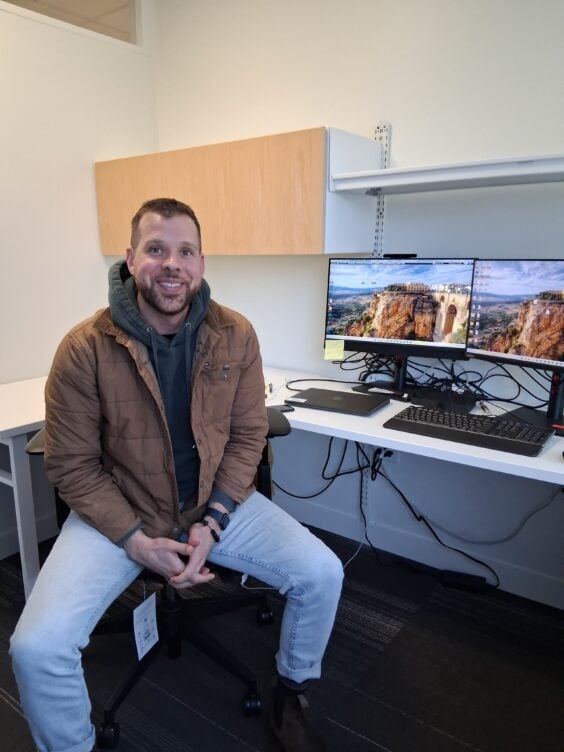
Sometimes a person is ready to leave the hospital but can’t go home until the home is cleaned. Sometimes they need help with upfront fees to join a co-op or other forms of housing. These housing start-up costs can be substantial as well as a barrier to securing long-term housing. “I remind people that our help is short-term and that we will work collaboratively towards a plan that can support them with next steps,” he says.
How referrals and fast action help
Referrals come from social workers who already know the patient’s health, income, and housing history. “We usually rely on hospital social workers to perform an initial assessment of patients’ needs,” says social worker Jesse Hilburt. “We always encourage colleagues to reach out, even if they’re unsure, to discuss potential risks, available resources, and possible strategies to support patients’ housing stability. In several cases, patients can be one small, unforeseen issue away from potentially losing their housing.”
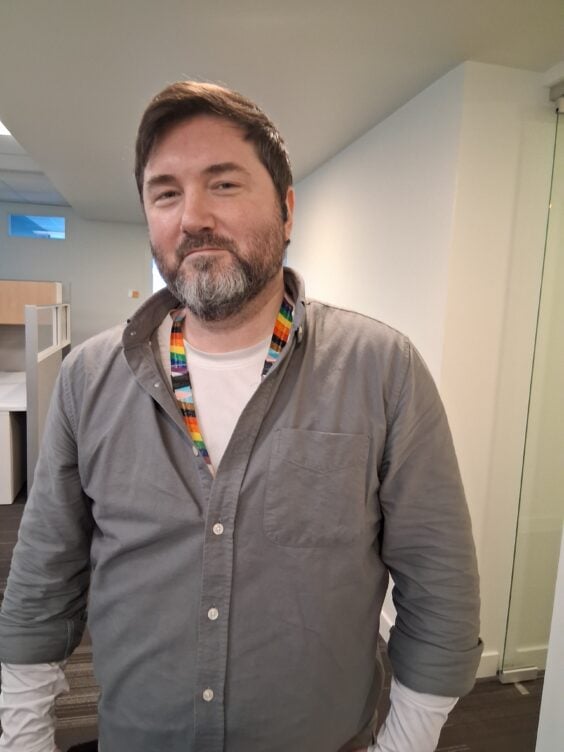
Hilburt explains how important it is to act quickly. “We try to respond as swiftly as possible to reduce the chances of patients maybe going to shelter or being unable to address their medical needs. A one-time rent payment can prevent an eviction and allow a person the necessary time and opportunity to re-establish stability in their housing situation. Funds can be dispensed in as quickly as one week to help support folks through these unexpected and incredibly stressful times.”
Hilburt and Dickinson lead the daily work. Peer support worker Teresa Darius and a social work assistant add unique and complementary supports.
What a peer brings
People trust the peer support worker because she understands their lives. “I use my life experience with homelessness and addiction to help people who feel lost, scared, or unsure about the system,” says Darius. “They trust me because I lived that life, too. My past gives me skills you can’t learn in school. It helps me talk to people when they’re upset or afraid.”
Some clients deal with anxiety, trauma, language barriers, mobility limits, or long histories of homelessness. “Some people only calm down when they see someone like me who understands survival mode,” she says. “Sometimes all they need is someone to help them.”
Her presence helps people attend appointments and follow care plans. Staff also see less stigma when her role is visible. “The Reaching Home program helps people who aren’t connected to any team. They fall through gaps in the system. We catch them.”
How Reaching Home helped Zuwena find a permanent home
For Zuwena, support did not stop after one month of rent. She needed a permanent place after temporary housing. She tried to enter co-op housing, but medical debt affected her credit.
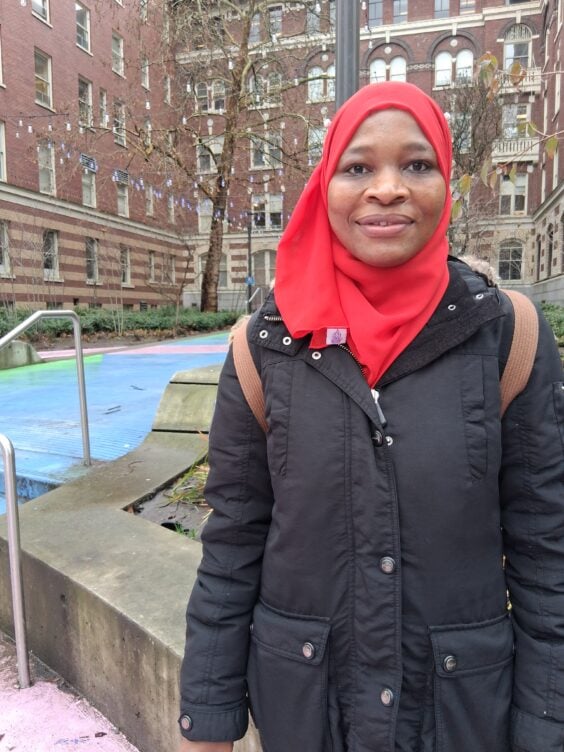
“The Reaching Home team wrote a letter explaining that my debt came from hospital costs. This helped the co-op accept my application,” she says. “The team also helped me pay the co-op fee and get furniture, so my small studio felt like a real home.”
Her sister applied to the same building with support from the team, which gave them stability during a difficult time. Reaching Home also gave Zuwena grocery cards when she had no income.
Zuwena received her transplant in July 2025. After a heart transplant, you must keep your home clean and attend follow-up care. “The first three months after my transplant were the hardest,” she says. “But having a stable home meant I didn’t need to rush back to work too soon. I could focus on healing because I had a quiet and safe space.”
She takes daily medication for life, and a stable home helps her track pills and appointments. Zuwena now works part-time in childcare, hopes to study in a public health master’s program, and save money to visit her son in Tanzania.
What makes housing hard to find
Affordable housing is hard to find. Seniors and people with low-fixed income are particularly vulnerable and can face additional barriers. Some people lack ID or references. When applicants can’t meet required income or reference checks their housing options become increasingly limited. In some cases, and without support, people can end up in shelter. Reaching Home fills that gap so people can remain engaged in health care and focus on other goals. “I hope the program continues because it changes lives every day,” says Darius.
Positive feedback from Zuwena
Today, Zuwena feels stronger. “Now, I feel stronger and have more energy. I can feel the difference that comes with having a new heart.”
Her home gives her peace as she keeps healing. “I want other patients to know there is a program that can help them find a place to stay so they don’t have to face housing worries alone.”
Related stories: Reaching Home aims to prevent and reduce homelessness – The Daily Scan
Story by Marcelo Dominguez, Providence Health Care