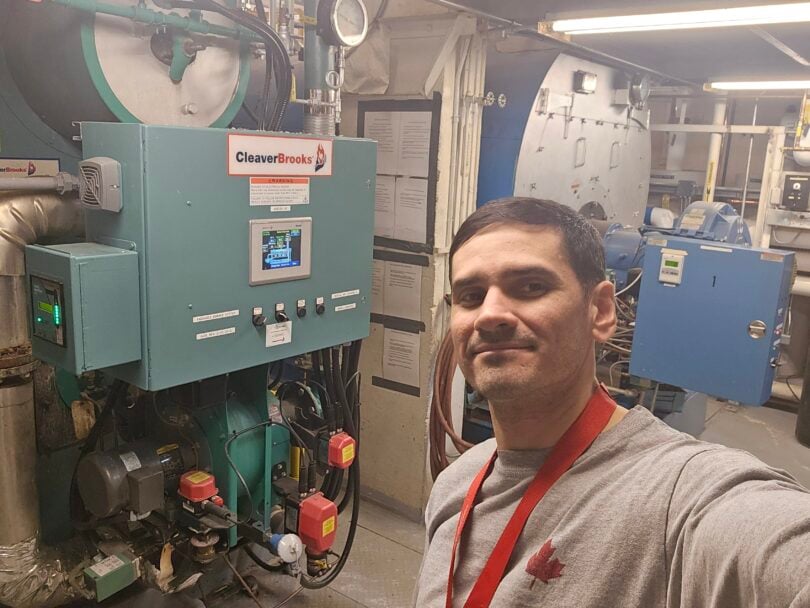
Hospitals aren’t just powered by compassion and clinical expertise. They’re also powered by complex mechanical systems, utilities, and life‑safety infrastructure that must work flawlessly every hour of every day. Boilers, pumps, valves, electrical systems, and miles of piping and wiring quietly support patient care behind the scenes.
At Providence Health Care, that responsibility belongs to Facilities, Maintenance and Operations (FMO). Their work ensures the hospital’s physical environment is safe, reliable, compliant, and ready, so clinical teams never have to worry about the building around them.
As FMO Director, David Marier, puts it: “When FMO is doing its job well, the hospital can focus entirely on patient care.”
Two of the people helping to make that possible are Power Engineers Alfredo Gonzalez Rangulan at St. Paul’s Hospital and Samuel John Wilfred, Assistant Chief Engineer at Mount Saint Joseph Hospital. Their paths into power engineering are different, but together they represent the steady, often unseen work that keeps our hospitals running 24/7/365.
Finding their place in a critical role
For Alfredo, joining Providence nearly two years ago marked the beginning of a new chapter in his power engineering career.
“I adapted quickly,” he says. “The supervisor and manager made it really smooth to understand the plant and the hospital.”
Working in a hospital environment brought new complexity and responsibility. Alfredo was drawn to the opportunity to deepen his technical skills while supporting systems where reliability, redundancy, and safety are non‑negotiable. Every decision connects back to patient care, even if patients never see the work itself.
For Samuel, now the Assistant Chief Engineer at Mount Saint Joseph Hospital, Providence offered something equally important: exposure to evolving technology and a clear path to growth.
“I wanted more opportunities to learn,” he says. “Providence gives you that. I started as a casual, then became full‑time, and now I’m an Assistant Chief Engineer.”
Both describe Providence as a place where curiosity, accountability, and dedication are recognized — and where taking ownership of complex systems opens doors.
Systems, safety, and constant problem-solving
Power engineers help manage the heartbeat of the hospital. From steam plants and air systems to emergency power and life‑safety infrastructure, their work is guided by one priority: keeping systems stable, predictable, and ready before problems arise.
Across FMO, each day begins with situational awareness. Overnight alarms and issues are reviewed, critical systems are confirmed stable, risks are identified, and work is prioritized based on impact. The goal isn’t reaction, it’s readiness.
At St. Paul’s Hospital, Alfredo starts his shift by reviewing the logbook, bringing boilers online, and connecting with teammates. From there, his day becomes a rotation of rounds, inspections, preventative maintenance, and responding to work orders that can’t wait.
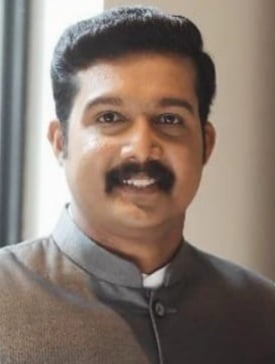
“I used to rely on experienced people when I started,” he says. “Now I’m the one others rely on and the one fixing a lot of things.”
At Mount Saint Joseph Hospital, Samuel’s role requires rapid decision‑making and coordination. He’s often the first to respond when a sound changes; a temperature drifts, or a system behaves unexpectedly.
“When something needs to be fixed immediately but can’t interrupt patient care, that’s the challenge,” he says.
Much of FMO’s work is quiet and preventive — focused on identifying early warning signs, protecting critical systems, and reducing surprises before they become incidents. Trades collaborate closely, communicate constantly, and escalate issues early, knowing that safe operations depend on teamwork and trust.
Small moments, big impact
Though they don’t provide direct clinical care, both engineers understand that their work shapes the environment that patients and care teams depend on.
For Alfredo, the impact shows up in the relationships he builds across the hospital.
“I talk to so many people like nurses, staff, leaders,” he says. “You learn how to approach different behaviors, and you learn a lot from others.”
For Samuel, one moment made the connection especially clear. After repairing a bedside light for a patient who couldn’t speak, he later received a handwritten note: “That was a great help young man, God Bless.”
“It meant so much,” he says. “It’s a reminder that even small things matter.”
These moments reflect FMO’s broader success: when systems work quietly in the background, clinical staff can trust the environment, and patients can focus on healing.
A culture of care and accountability
Both engineers describe Providence as a workplace built on support, learning, and shared responsibility.
Alfredo values the stability, benefits, and encouragement to speak up about safety and system improvements.
“It’s a supportive environment,” he says. “People care about doing things better.”
Samuel sums up his experience simply: “The nicest place I have worked ever.”
For him, leadership support, ongoing training, and a strong sense of community have shaped both his career and his personal growth.
“This role has made me a more disciplined professional,” he says. “And it’s helped me grow into a more compassionate human being.”
A future powered by technology and leadership
As hospitals become more complex and technology‑driven, both engineers see opportunity ahead.
For Alfredo, the future includes leadership—motivating others, encouraging respect, and creating environments where people can do their best work.
“Listening and learning from each other is important,” he says.
For Samuel, advancing systems and smarter infrastructure is an exciting challenge.
“Health care will become more technologized,” he says. “For me, the future at Providence is promising.”
Advice for those considering a trade career
Both engineers offer practical—and heartfelt—advice for anyone thinking about power engineering in health care.
“If you want job stability, good benefits, paid sick days and vacations, and a reliable work schedule, this is a great place to be,” says Alfredo.
“Providence is a wonderful place to work,” Samuel adds. “And if we all smiled and greeted each other a little more, it would be even happier and more beautiful.”
The work of power engineers may rarely make headlines. But without them, and without the broader FMO team, the hospital could not function. Their success is measured in reliability, trust, and the quiet confidence that everything will work when it matters most.
Curious about a trade career with Providence? Come meet our team at the Skills Canada BC Competition on April 15, 2026, at the Abbotsford Trade & Exhibition Centre – entry is free! Or check out our FMO careers page for more information: Trades | Providence Health Care
By Jessica Collins