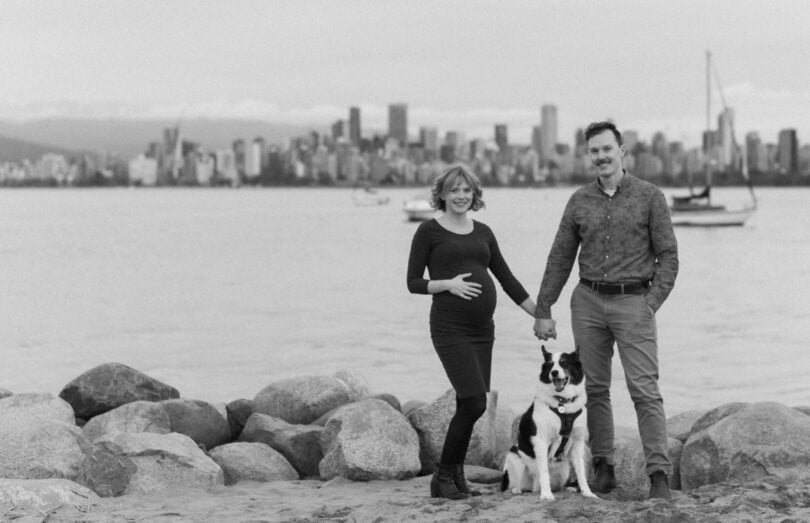
St. Paul’s Hospital has been part of Dr. Melanie van Soeren’s life for years. It’s where she was born, where she trained, and where she now works as a doctor. It’s also where she wants to meet her first baby when she gives birth in April.
“Some of the biggest moments in my life happened inside that hospital,” Melanie says. “It feels special to bring my baby into the same hospital where I was born.”
Her story shows how trust grows across generations. Her mother, Julie, still remembers when Melanie was born at St. Paul’s in July 1989.
A baby born at St. Paul’s grows up to work here
“I arrived at the hospital in labour early in the morning,” Julie says. “The man in the parkade looked at me and said you’re having a baby today. I said I really hope so.”
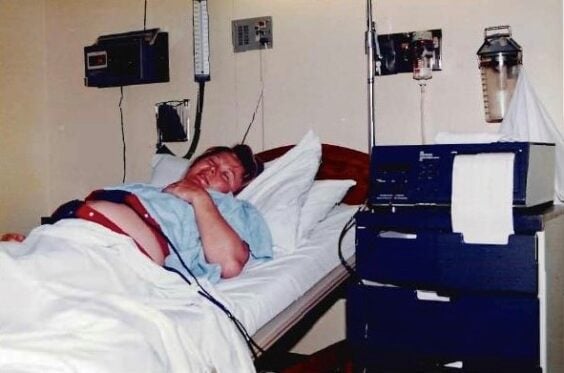
She remembers going into the old wing of St. Paul’s Hospital and how the staff made her feel calm. “I remember being taken straight to the delivery room. Everything moved quickly and there was no long wait.”
Julie says Melanie was also her first baby and how the support from the care team felt reassuring. “The staff were kind and attentive. I always felt someone was there when I needed help. No one rushed in and out of the room. The team stayed present and made me feel comfortable.”
Labour didn’t take long. “By the time doctors examined me I was already seven centimetres. There was no time for an epidural.” Even with strong contractions, she says, “I felt as relaxed as you can be.” And then there was an unexpected development.
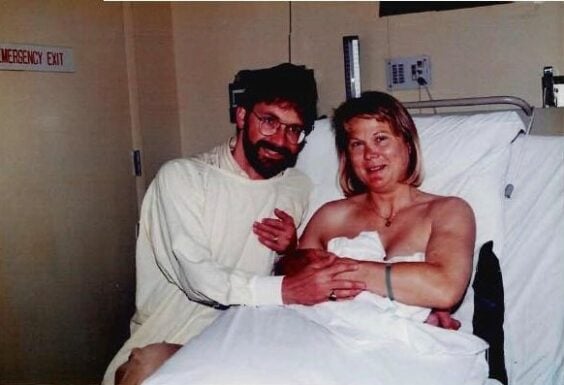
“When Melanie was born the cord was wrapped twice around her neck,” Julie says. “She wasn’t breathing at first, which was frightening for a moment. The pediatric team stepped in right away. Within minutes her lungs filled and her colour turned pink.”
Julie still remembers how things changed suddenly. “She had a rocky first minute of life. After that she was completely fine.”
She says that experience also stayed with the family for another reason. “My husband was very worried when he first saw her. Her colour wasn’t good and he feared something was off. When they took Melanie to special care, he said I’m following her. I am not letting her out of my sight.” He stayed close to their baby, she says, “to make sure our baby stayed with us.”
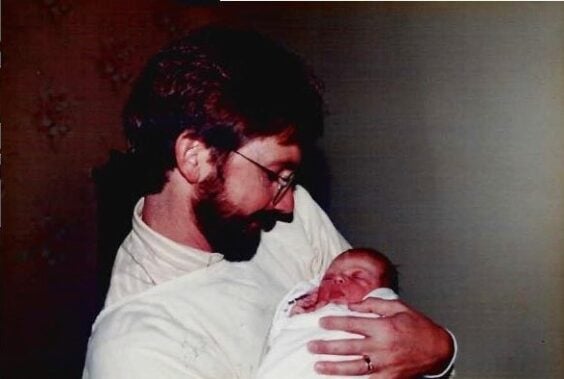
That story still matters to Melanie as she reflects on how stories of her own birth influenced how she sees the hospital today.
“My mom told me my birth had some complications. The team acted quickly and took great care of me. I spent a short time in the NICU, and my dad stayed right beside me. Stories like that build trust in the people who work there,” Melanie says.
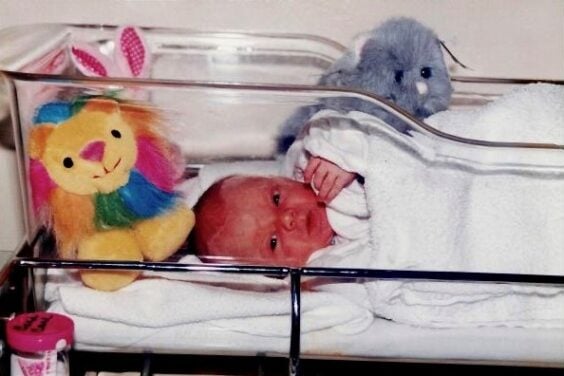
Julie also remembers the calmer moments of her first days as a mother. “Friends came to visit me and Melanie. It felt like a warm and supportive time. The building looked a bit old, but that didn’t matter to me because the care was excellent.”
She asked nurses to bring Melanie to her at night for feeding. “They listened and did exactly that.”
Birth care that feels calm and personal
Now Melanie is making her own decision as both a doctor and expectant mother. “I know the care at St. Paul’s is excellent. That matters most when you’re having a baby. No matter what happens, I know my baby and I will be in good hands.”
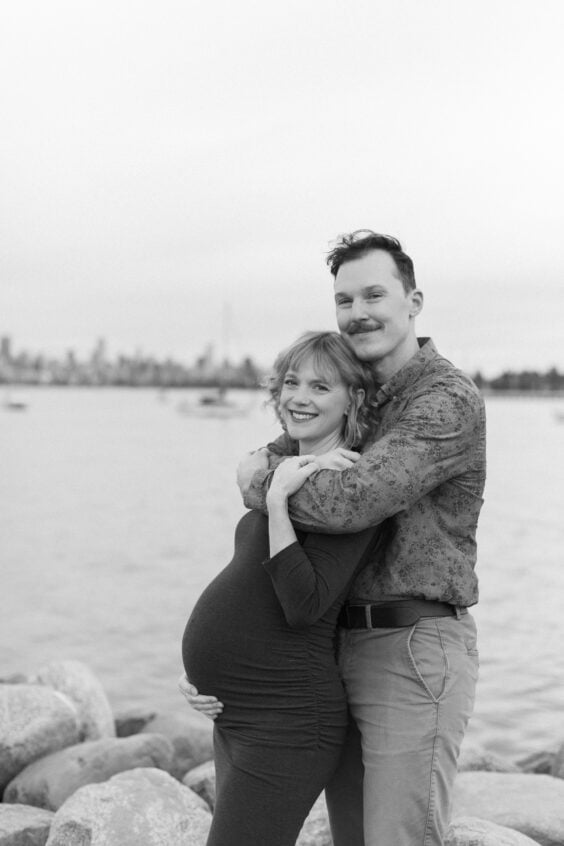
She says the hospital feels personal in a way many families want during birth. “St. Paul’s feels like a small community hospital. People know each other and work closely together. Even if you don’t know the staff, people there are kind and welcoming. The nurses care deeply about what they do. You feel that the moment you arrive.”
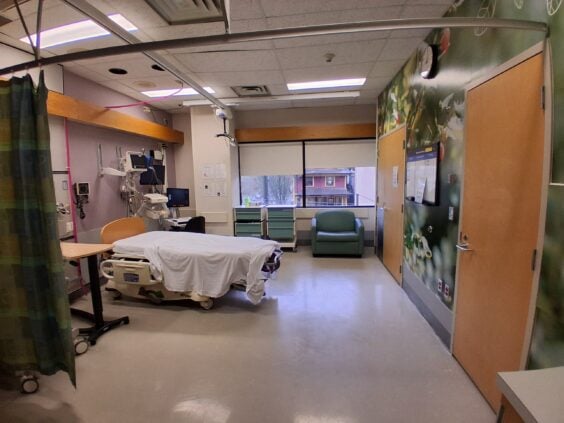
Melanie also likes the calm unit and the welcome as you enter it. “When you walk in, someone greets you and helps you find where you need to go. The unit feels warm and calm instead of cold and clinical. All labouring rooms are private and have their own bathroom, which gives families privacy during labour.” Privacy helps you focus on birth.
Classes and support for parents that continue at home
Amy Hamill is the director of the Pregnancy, Birthing and Newborn (PBN) program at St. Paul’s Hospital. She says many families choose the program for reasons that are easy to understand.
“At St. Paul’s we care for families that have been coming here for generations and have deep roots with us. A grandmother was born here. Her daughter was born here. Now the next baby is born here too.”
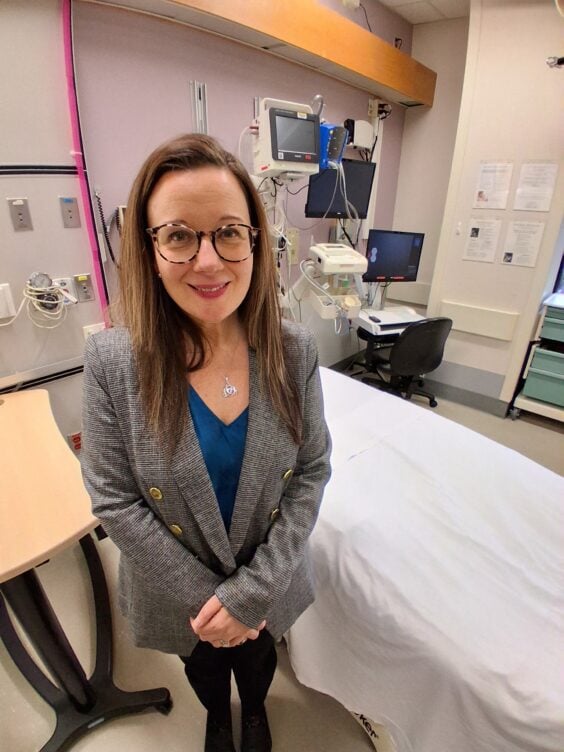
Amy says that history still influences how people choose where to give birth. “Everyone in Vancouver seems to know someone who was born at St. Paul’s. That history matters to families. Families tell us they choose St. Paul’s because someone they trust recommended us. A doctor, a friend, or someone in their family.”
She says the program wants to deliver care that feels personal. “Our program is large enough to offer specialized care, yet small enough to provide meaningful, personal support during such a significant time in one’s life. We work closely with parents to develop birth plans that reflect their individual needs and preferences. We try to make birth feel calm and supportive. Families should feel cared for and culturally safe, not like they’re moving through a system.”
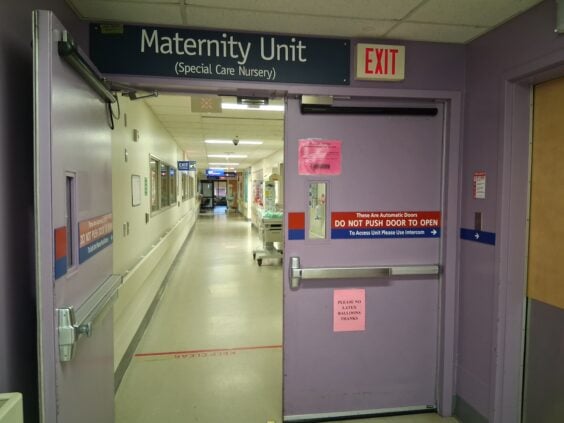
That support for parents starts before birth and continues after families go home.
“We offer prenatal classes, free drop-in infant feeding classes, and breastfeeding support. After birth, parents can join weekly virtual meetups to talk and learn together.” Amy says some families stay connected for months.
Practical tips to plan your birth care team
“Check where your provider has hospital privileges, so your care stays consistent,” Melanie says. “Different providers work for different families. Some choose a midwife, some a family doctor, some an obstetrician. Think about what care style fits you and your medical needs.”
Melanie’s own care includes a midwife she trusts and a hospital care team that is close by. “If extra care is needed, the obstetrics and pediatric teams are right there.”
What the new hospital will add for families

This family’s story also points to the future. St. Paul’s is getting ready to open a new pregnancy, birthing, and newborn centre at its new hospital, located about three kilometres away in Vancouver’s False Creek Flats.
Amy says the goal is simple. “The building may be new, but who we are won’t change. Our culture will come with us—along with the personal care our families know and trust.”
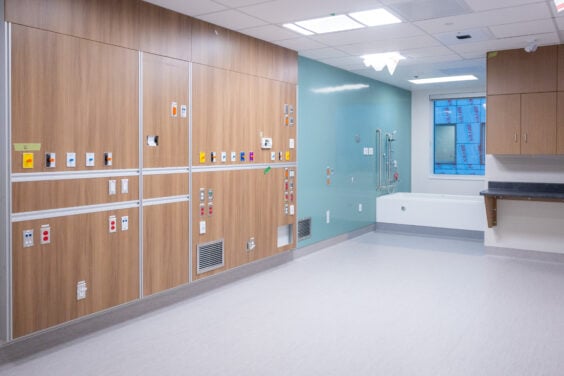
She says the new space, opening in early 2027, will give families more privacy and more time together. “In the new hospital every family will have a private room. This is a big change, especially in the Neonatal Intensive Care Unit. The parent and the newborn will be cared for and stay in the same room, which will have all amenities including a private bathroom. Keeping parents and their newborns together underpins our philosophy of care. When parents walk into the new PBN unit, we want them to feel at home from the very first moment.”
Melanie is also looking forward to those changes. “The new hospital will have large birthing tubs that make water birth possible. The goal is to create rooms that support natural birth in a calm setting. Better parking and easier access will help families when they arrive in labour.”
These details touch real moments. Fast entry and privacy during labour help, and close contact supports babies who need extra care.
Julie sees the full circle clearly. “Melanie was born at St. Paul’s. Now she works there as a doctor. When she told us that she was having her own baby at St. Paul’s, we thought it was pretty special. It felt like life coming full circle.”
Julie also has simple advice for new parents. “Choose the person who will care for you. That matters more than the location.” At the same time, she says, “Birth can change quickly. That’s why I prefer a hospital where help is right there.”

As Melanie waits for her baby, she keeps coming back to one thought.
“Holding my baby for the first time will probably be the best moment of my life. I want that moment to feel calm so my partner and I can focus on our baby. Because I trust the care team, I can focus on excitement instead of worry.”
For this family, St. Paul’s holds the past, present and the future. Soon, it will welcome a new baby.
Story by Marcelo Dominguez, Providence Health Care