Spiritual health is an important yet understudied area of health care. As health systems respond to increasing cultural, religious, and spiritual diversity, researchers are beginning to explore new models of spiritual support that extend beyond traditional frameworks.
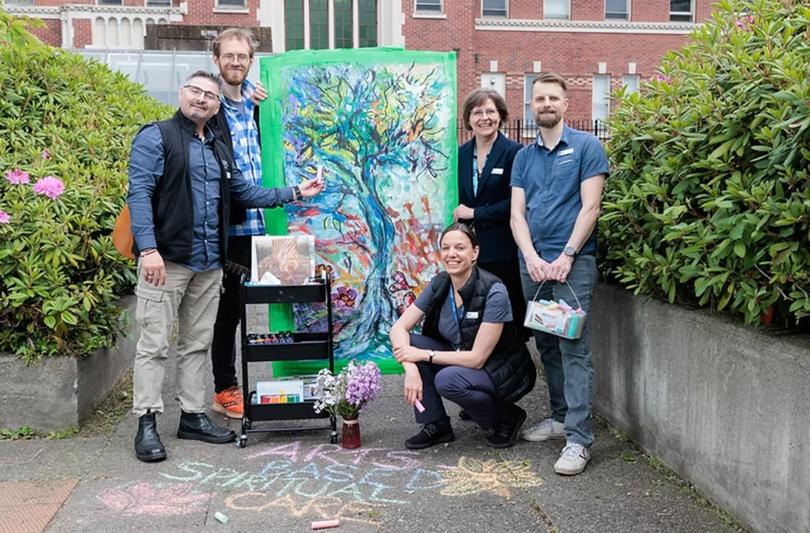
A recent study published in the Journal of Religion and Health examined the impact and benefits of arts-based spiritual care (ABSC) in health care settings, finding that artistic expression can support health outcomes and overall wellbeing. The study, led by Dr. Anne Tuppurainen, Director of Spiritual Health and Pastoral Care at Providence Health Care (PHC), in collaboration with Trinity Western University (TWU) researchers Drs. Kendra Rieger and Sheryl Reimer-Kirkham, found that art can act as a meaningful spiritual practice and can be an inclusive, culturally responsive approach to spiritual care.
Spiritual health care has become increasingly complex
Spirituality is central to healing for many people and is recognized as part of health care in BC. PHC’s Spiritual Health and Pastoral Care Department follows the Ministry of Health’s framework for BC’s spiritual health professionals and is an accredited training site for clinical psychospiritual education with the Canadian Association for Spiritual Care (CASC/ACSS).
“At Providence, we consider spiritual health services to be essential to healing the whole person,” says Dr. Francis Maza, Vice President of Mission, Ethics and Spirituality at PHC.

Spiritual health practitioners provide support across a range of needs, including grief and loss, end-of-life support, and spiritual practices such as mindfulness, meditation, faith-based rituals. They collaborate with Indigenous wellness liaisons, community faith leaders, and spiritual care volunteers, and support health care staff.
Growing religious and cultural diversity, alongside a rise in individuals who identify as spiritual but not religious, has made delivering spiritual care increasingly complex. Arts-based practices may offer alternative pathways of care that resonate across cultural and spiritual traditions.
Study found benefits to arts-based spiritual care
A recent scoping review, a type of research that systematically maps and summarizes existing evidence, examined how art has been used in spiritual care across health care settings. Funded through the 2024 Insight Grant competition, the study explored three core questions: what are the philosophical foundations for integrating art and spirituality in equitable ways; how the relationship between art and spirituality has been understood historically and culturally; and how social identity factors such as race, culture, and gender shape access to arts-based spiritual support.
The analysis found that art frequently serves as a medium for spiritual expression and healing, with outcomes including spiritual wellbeing, emotional relief, and relational connection. The findings emphasized the importance of applying equity-based, intersectional frameworks to arts-based spiritual care to avoid reinforcing existing inequities.
The Art Cart initiative brings arts-based spiritual care to patients
To advance the delivery and accessibility of ABSC, the PHC Spiritual Health and Pastoral Care Department established the Art Cart Initiative, which brings high-quality art supplies directly to patients, while spiritual health practitioners provide care and gather knowledge about how art functions within spiritual health encounters. The project received the 2025 PHC Society Award and was awarded a CIHR Project Grant as part of a larger research collaboration with TWU.
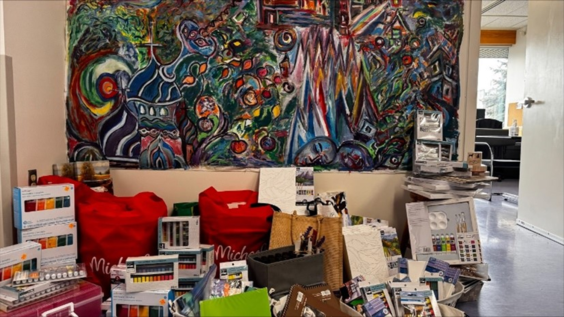
Data gathered through this initiative has found that art can function as a spiritual language that enables expression without the need for verbal communication. This is particularly beneficial for individuals facing pain, distress, language barriers, or physical limitations. Findings also suggest that staff participation in arts-based spiritual care can offer energizing benefits, and may contribute to reduced burnout.
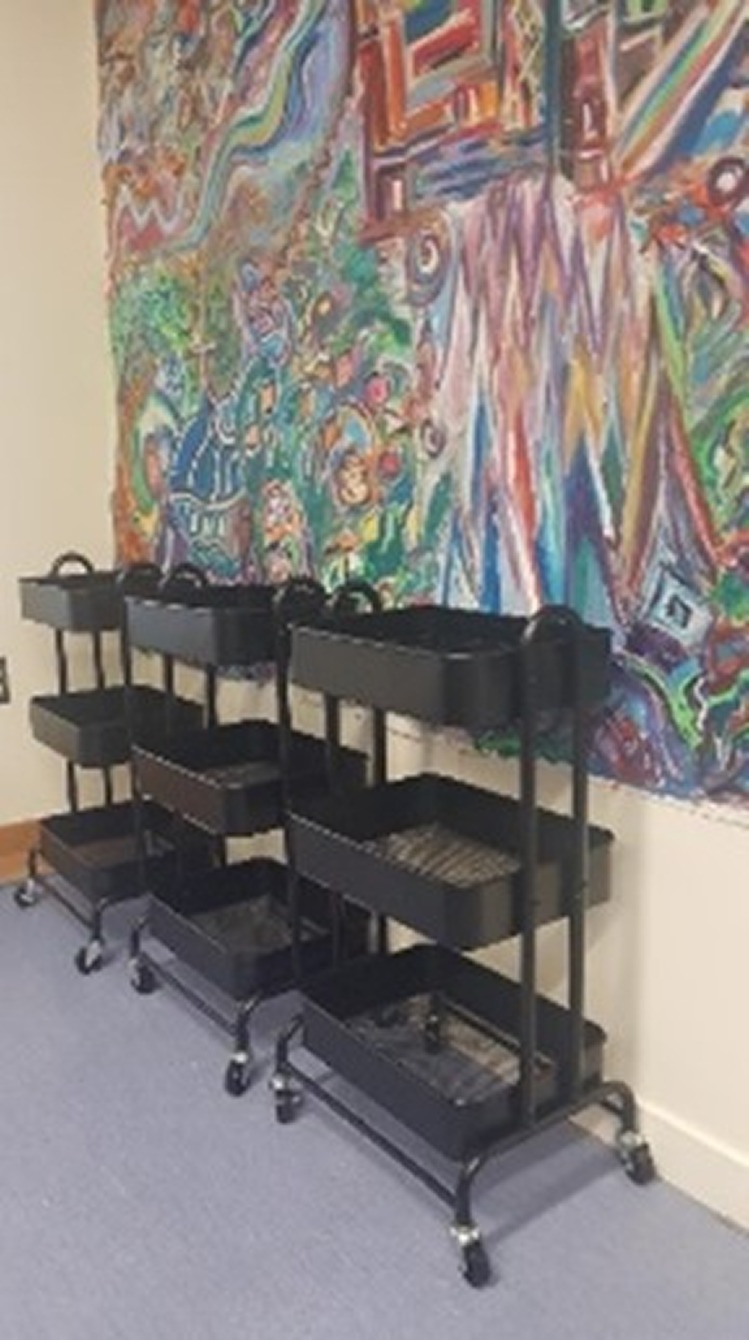
“Art is one of those elements, where we can bring in some art supplies, and it is cross-culturally accepted. You don’t need to be good at verbalizing, or maybe you can’t even speak – but you can speak through art,” says Dr. Tuppurainen.
This initiative is part of a larger multidisciplinary research stream, Arts for Equity, which explores the arts as a way of healing, disrupting, learning, and sharing for reconciliation and equity in healthcare.
“This work affirms that spiritual health is not an abstract ideal, but a lived reality at the bedside,” says Dr. Maza.
ABSC shows potential, but more research is needed
Arts-based spiritual care shows significant promise as a method of providing inclusive spiritual care, but more information is needed around equity-oriented approaches, patient perspectives, and how such practices can be standardized or scaled across health care environments.
To address these gaps, the PHC Spiritual Health and Pastoral Care Department is conducting further studies to discover how arts-based spiritual care can improve the health and wellbeing of structurally disadvantaged people, understand how spiritual health practitioners across Canada are utilizing art, and engaging faith leaders to explore how art can support diverse spiritual traditions in healthcare contexts.
“I am pleased to see our Spiritual Health team contributing to the advancement of knowledge about the power and impact of spiritual care and its essential role in whole‑person health,” says Dr. Maza. This work aims to expand inclusive, culturally safe approaches to spiritual health throughout Providence and beyond.
By Grace Jenkins, Providence Research