Across Providence Health Care (PHC), minimum Nurse‑to‑Patient Ratios (mNPR) are beginning to reshape what a shift feels like for nurses — and what care looks like for patients.
While implementation is still underway, early experiences on acute medicine units like 7CD and 8A at St. Paul’s Hospital in Vancouver offer a clear picture of what’s changing: safer workloads, more time with patients, stronger teamwork, and the ability to practice nursing the way it was always meant to be practiced.
For Jessica Soenen and Laura Kelly, two registered nurses working in different medicine units, the impact of mNPR has been both immediate and meaningful.
Skill, compassion, and constant pressure
Before mNPR, busy shifts on both units were defined by intensity.
On 7CD, Jessica describes days that were “very busy and hectic,” with nurses often caring for four to five patients, and sometimes while still absorbing new admissions or managing patients who were acutely ill or behaviorally complex.

“There wasn’t enough time,” she says. “Breaks were missed. One‑on‑one time with patients was limited. Sometimes essential care like wound care had to be pushed to night shift because there just weren’t enough hours in the day.”
On 8A, Laura’s days followed a similar rhythm of constant prioritization. Her patients, many from Vancouver’s Downtown Eastside, often live with substance use disorders, chronic wounds, and unstable housing. Their care is complex, time‑intensive, and deeply relational.
Mornings began with pain medication requests, blood glucose checks, assessments, and high‑risk medications like methadone, which require a second nurse to administer safely. The rest of the day filled quickly with wound care, IV antibiotics, personal care, reassessments, and maintaining a safe bedside environment.
“Heavy workloads often meant skipping breaks or staying late just to finish everything,” Laura says. “Overtime, that leads to fatigue and burnout.”

A safer, steadier flow
Since the mNPR implementation started in their units, both nurses describe a fundamental shift in how their days unfold.
On 7CD, patient assignments are now typically three to four patients, distributed more evenly across the team. This has improved the flow of the shift and made it easier to balance patients with higher acuity or complex needs.
Over on 8A, Laura has noticed her workflow is becoming more efficient and predictable.
“I now have adequate time to plan my day, prioritize care, and complete my work within my shift,” she says. “I rarely hand off unfinished tasks anymore.”
Across both units, nurses report less end‑of‑shift stress, fewer sick calls, and a stronger sense that the workload is finally more sustainable.
More time with patients, and with each other
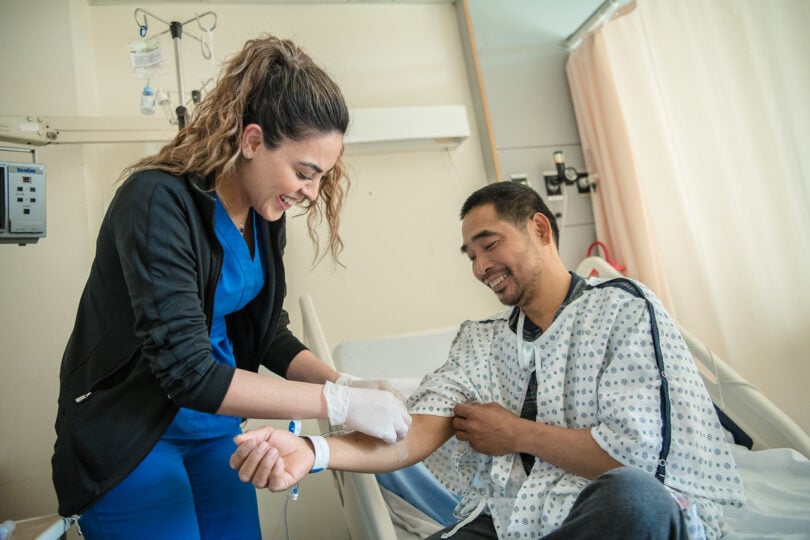
One of the most significant changes has been the ability to spend more meaningful time with patients.
“Many of our patients just want to talk,” Jessica says. “They ask if we can sit with them. With heavy assignments, that was rarely possible. Now, it often is.”
That time builds understanding, trust, and stronger advocacy, which is something families notice as well.
Laura echoes this shift, describing how more manageable workloads allow for thorough, holistic assessments that consider not only physical health, but social and functional barriers to care.
“I can identify needs earlier, initiate consults, and coordinate support from the interdisciplinary team,” she says. “It allows me to meet patients where they are in their health journey.”
The added capacity has also strengthened team‑based nursing practices.
On 8A, mNPR created space for mentorship and education. With several new hires on the unit, Laura has been able to share her growing expertise in wound care, including teaching colleagues how to assess wounds, develop care plans, and choose appropriate products.
“That kind of teaching wasn’t possible before,” she says. “Now it directly supports better patient outcomes.”
Doing things the right way
Both nurses also describe fewer work‑arounds and safer decision‑making since mNPR began rolling out.
On 7CD, even having one extra nurse on the floor has made a difference — whether it’s having help during wound care, safely escorting patients off the unit, responding to emergencies, or ensuring proper three‑person transfers.
“In a code situation, that extra set of hands and an extra mind really matters,” Jessica says.
For Laura, the change has meant being able to consistently deliver care within policy, within her scheduled shift, and without overtime or missed breaks.
“Being able to do things the right way, every time, benefits both patient safety and nurse wellbeing,” she says.
When care feels genuinely better
For both nurses, mNPR has made room for the moments that remind them why they chose nursing.
Jessica speaks about being able to truly understand her patients, advocate for them, and provide care she’s proud of, and without feeling constantly rushed or drained.
Laura recalls caring for a very sick patient with diabetes and chronic wounds. With time to sit and talk, she was able to provide education, encourage him as he worked to reduce substance use, and acknowledge the progress he’d made.
“He left that conversation hopeful and motivated,” she says. “And I left feeling fulfilled.”
Another moment stands out even more clearly for Laura: caring for a patient with multiple chronic wounds who had avoided dressing changes due to embarrassment and lack of trust. With time and capacity, she listened, addressed barriers with the medical team, planned continuity of care, and created a dignified, patient‑centered experience — right down to playing his preferred music during care.
“At the end of the shift, he thanked me and told me I was an awesome nurse,” she says. “That’s when I thought, this is what nursing is supposed to feel like.”
Looking ahead
B.C. is continuing to rollout Phase One of minimum Nurse-to-Patient Ratios (mNPR) across the province. Jessica and Laura are experiencing the change ratios are bring to their unit. At Providence Health Care, we’re proud to be ahead in this journey, with all Phase 1 units at St. Paul’s Hospital and Mount St. Joseph Hospital activated—turning policy into practice and creating safer, more sustainable conditions for nurses and the patients they care for.
“It’s reassuring to see initiatives like this actually being implemented,” Jessica says. “It makes you feel supported, and not just as a nurse, but as a person.”
Laura agrees. “The new ratios remind us why we chose this profession. To help people. They give us the time and capacity to provide high‑quality, patient‑centered care and support each other as colleagues.”
Together, their experiences show that mNPR isn’t just about numbers. It’s about creating the conditions where nurses can stay present, patients feel seen, and care can be delivered the way it should be.
For more information about mNPR, visit Minimum nurse-to-patient ratios – Province of British Columbia or explore careers at Providence Health Care at Current opportunities | Providence Health Care.
Story by Jessica Collins, Digital Recruitment Marketing Specialist