
At Providence Health Care, researchers and clinicians are helping change how we understand and treat Chronic Obstructive Pulmonary Disease, or COPD. COPD is the fourth leading cause of death in Canada and the leading cause of hospital admissions. It also costs the health care system more than $2 billion each year.
Despite its prevalence, COPD has historically been under-recognized and under-studied. While the clinical criteria for diagnosis – primarily persistent airflow limitation, a history of smoking, and the exclusion of other diseases such as asthma – are well established, the disease’s true complexity is only now coming into sharp focus.
At St. Paul’s Hospital, respirologist Dr. Don Sin and his team at the Centre for Heart Lung Innovation are using artificial intelligence (AI) to better understand COPD and help move care toward treatment plans that fit each patient’s needs.
COPD may be several diseases hiding under one label
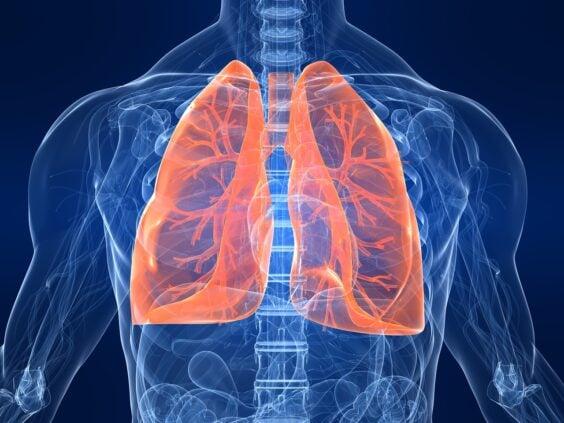
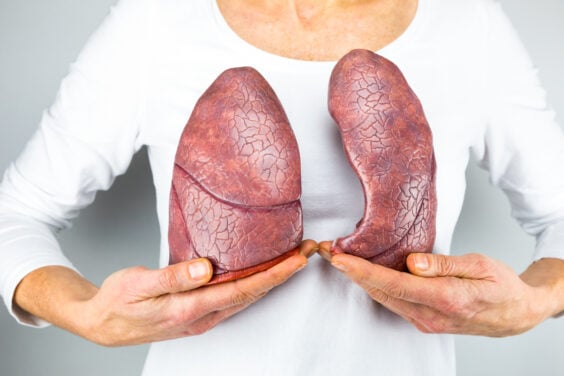
Researchers at Providence Health Care see COPD as a group of conditions rather than a single disease. The term COPD includes chronic bronchitis, where airways are persistently inflamed and clogged with mucus, and emphysema, which involves the destruction of the air sacs in the lungs. Patients may show similar symptoms, but the disease can develop in very different ways inside the body.
“COPD is defined by clinical criteria, but within those criteria, the biological pathways leading to COPD can be vastly different from person to person,” explains Dr. Sin. Understanding these differences is a major focus of research at St. Paul’s Hospital because they can influence how patients respond to treatment and how their disease progresses over time.
Some patients develop COPD due to genetic factors. Others develop it after years of smoking or exposure to harmful particles in the air. Even within one person’s lungs, the severity and extent of damage can vary enormously.
This variation means no two patients experience COPD in exactly the same way. One person’s disease may be driven by high levels of a specific type of white blood cell, known as eosinophils, and respond well to steroids, while another may be fuelled by neutrophil-driven inflammation, requiring completely different management strategies. Some patients struggle with frequent flare ups and relentless coughs, while others face severe weight loss and muscle weakness. Researchers at Providence Health Care are working to understand these differences so care can better match each patient’s condition.
A New Era: Joint Clinical and Molecular Subtyping
This heterogeneity has direct implications for diagnosis, prognosis, and treatment. COPD treatments have traditionally been based on broad categories and a “one-size-fits-all” approach, often failing to address the unique nature of each patient’s disease. Given the enormous burden COPD places on patients and healthcare systems worldwide, there is an urgent need for more precise approaches to diagnosis and treatment.
A recent longitudinal cohort study published in Nature Communications – the result of a global collaboration led by Dr. Sin and colleagues from Harvard, Boston, and Europe – aimed to find these solutions.
Understanding this complexity requires large longitudinal studies that follow patients over time. These datasets allow researchers to capture wide variations in how COPD develops and progresses.
Harnessing the power of AI, Dr. Sin’s team used an advanced machine-learning algorithm known as a “variational autoencoder” to analyse data from hundreds of COPD patients. The team performed joint clinical-molecular subtyping, allowing the algorithm to cluster patients without the influence of human bias. Unlike traditional methods that focus on a single type of data, their approach combined clinical features, like lung function, frequency of flare-ups, and imaging results, with gene expression data from blood samples.
This AI-driven analysis revealed five distinct subgroups of COPD, each characterized by a unique combination of symptoms and underlying molecular pathways. For example, one subgroup is characterized by severe emphysema, another by frequent exacerbations, and yet another by chronic bronchitis symptoms. Importantly, the study confirmed that these subtypes are not mere academic distinctions—they reflect real differences in how the disease develops, progresses, and responds to treatment.
“We’re just at the beginning,” says Dr. Sin. “AI is helping us interrogate huge amounts of clinical and molecular data in ways that were impossible before. In the next five to ten years, we will see even more powerful insights that will transform care for complex diseases like COPD.”
Why This Matters: The Future of COPD Care
This research has profound implications for the future of COPD care.
“Therapies must target the molecular drivers of disease,” says Dr. Sin. “What works for one patient may not work for another, even though they share a COPD diagnosis.”
By identifying the biological pathways driving each subgroup, researchers hope to move beyond generic treatment approaches and toward precision therapies tailored to an individual’s disease – potentially improving outcomes and quality of life for patients worldwide.
The study also highlights that COPD is not neatly divided into separate categories. Most patients have overlapping biological and clinical features, with one or two pathways typically driving the majority of their symptoms. This complexity helps explain why a single treatment is unlikely to work equally well for every patient.
As Dr. Sin notes, “the molecular drivers and phenotypes are different, and that means that therapeutic targets must also change; one drug is not going to solve all of the features of COPD, even within a given individual.”
The reality of clinical practice is that each patient is unique, and future therapies will need to reflect this diversity.
A Call to Action
COPD is not a single disease, but a spectrum of related conditions that share symptoms, while being driven by different biological mechanisms. Dr. Sin’s research highlights the importance of recognizing that complexity – and investing in the science needed to translate these discoveries into better treatments.
“This research, while very poignant, sets the foundation for future therapeutic developments,” says Dr. Sin. “Research is catching up to the clinical evaluations, allowing us to fundamentally address the patients’ needs.”
With continued research, collaborative and multicentred approaches, and the computational power of AI, the future of COPD management has the potential to be more precise, predictive, and effective – offering new hope to millions living with this challenging disease.
By Tyla Casey-Knight, Providence Research