Providence Health Care (PHC) is bringing research into daily patient care at Holy Family Hospital (HFH) through a new Rehab Research and Innovation Lab (RRIL).
The lab sits inside the rehabilitation unit so PHC teams can study real patient needs and test ideas during care. This means patients at PHC get faster access to new approaches that can improve how they recover and live after serious illness or injury.
For many patients, recovery does not end when their hospital treatment is over. Surviving an illness or injury is often just the first step. What follows can be a long and challenging journey to regain everyday skills, independence, and quality of life.
This is where rehabilitation plays a critical role – and where research to improve patient outcomes can make a meaningful difference.
At Holy Family Hospital, PHC connects these two. The Rehab Research and Innovation Lab brings clinicians, researchers, and patients into a shared space. This approach allows real‑world clinical insight to inform research, and for that research to quickly benefit patients.
Why rehabilitation matters
Beyond survival or stabilization, rehabilitation focuses on helping patients restore function, adapt to changes in their health, and continue doing the things that matter most to them.
While there are many ways for modern medicine to extend the length of someone’s life, rehabilitation focuses on improving the quality of that life.
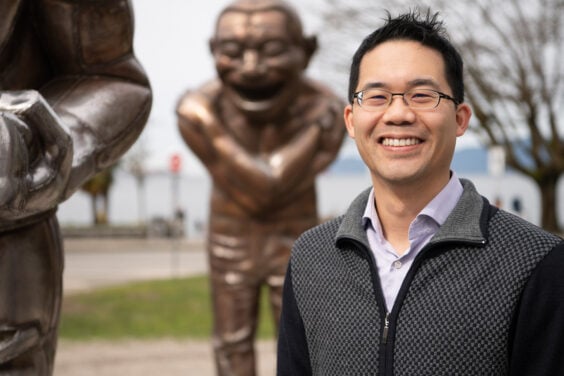
“We hear about bringing years to life, but what about life to years?” says Dr. Evan Kwong, Head of PHC’s Division of Physical Medicine and Rehabilitation and leader of the RRIL.
Rehabilitation care supports both restoration and adaptation. Success may mean relearning how to walk, dress, cook, drive, or use a computer – or finding new ways to accomplish these tasks when full recovery is not possible. The philosophy of rehabilitation care can be integrated throughout a hospital experience, rather than something patients simply “wait for” after other treatments are finished.
Closing a gap in research support
Despite the importance of rehabilitation, there has historically been limited research infrastructure dedicated to it. HFH provides specialized rehabilitation care for people recovering from stroke, orthopedic surgery, amputation, neurological conditions, trauma, and long hospital stays. However, leaders, including Dr. Kwong recognized a gap in the research and innovation infrastructure needed to further improve patient outcomes. Clinicians working in rehabilitation often saw opportunities to improve care but lacked the time and dedicated support needed to turn those ideas into formal studies.
RRIL was created to close this gap by embedding research directly into the clinical environment and supporting clinicians who want to ask questions, test ideas, and improve rehabilitation care.
The lab has been years in the making. The idea grew out of a 2019/2020 strategic planning process within the Division of Physical Medicine and Rehabilitation, which identified the development of a rehabilitation research and innovation centre as a key priority. Although progress slowed during the COVID-19 pandemic, work continued through planning, socializing this vision, and fundraising efforts with support from St. Paul’s Foundation. In 2023, an opportunity arose to join the CanStroke Clinical Trials Platform.
Additional mentorship from the PHC Department of Medicine (DOM) Innovation platform, a program that supports members in developing and implementing innovative, transformational projects, helped bring the lab into focus. Their guidance helped clarify the lab’s operational model, define a multi-year path forward, and develop a business case to support the final fundraising needs. This helped move the RRIL from an ambitious concept to a clinically ready research environment.
Support from generous philanthropic donors, in particular the Mary and Cecil Gordon/ James and Phyllis Parker Family Fund, allowed the lab to get off the ground with hiring Senior Research Consultant Sara Assadian and Research Coordinator Melissa Watt.
Providence Research also played a key role by supporting hiring and onboarding, providing research consultation, and offering networking opportunities and financial guidance.
Research embedded where care happens
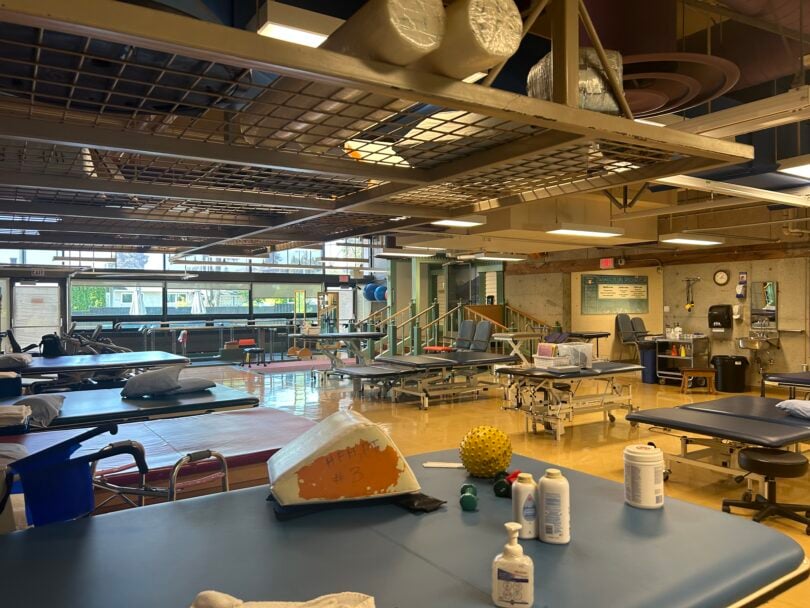
The RRIL is directly embedded within HFH, with research, clinical care, and education all located on a single floor. This layout supports frequent interaction between patients, clinicians, and researchers, and allows studies to be tightly connected to real clinical needs.
Patients at HFH include older adults – many with complex medical needs – as well as people recovering from stroke, neurological conditions, trauma, fractures, amputations, and prolonged hospital stays. This diversity of patients creates strong opportunities for clinically relevant, patient-centred research.
Supporting a wide range of research
Now that it is up and running, the RRIL will support a wide range of rehabilitation research, ranging from drug trials to quality improvement studies, patient-centred research focused on rehabilitation goals and outcomes, and technology-based projects. Early work has explored topics such as goalsetting in inpatient stroke rehabilitation and the use of smartphone motion sensors to assess balance.
A major milestone for the lab was joining the CanStroke Recovery Trials. The RRIL is now preparing to take part in its first multi-site clinical drug trial, which is testing a drug with the potential to improve stroke recovery in combination with traditional rehabilitation. This will be the first study of its kind at HFH and will help the team to build the systems and infrastructure needed to support future clinical trials.
Looking ahead
In the near term, the RRIL aims to complete recruitment and follow-up for its first clinical trial, launch additional studies, and deepen clinician engagement in research. Early signs show strong enthusiasm among staff, with clinicians actively volunteering and contributing ideas.
“Just seeing it so far in the last few months, everyone’s so engaged and excited about something like this happening,” says Dr. Kwong. “[The program is] also meant to elevate the culture that’s already there, to give that opportunity for the culture to thrive more. Because the learning potential is there, but we were missing the actions from a very structured research program.”
The long-term vision for the RRIL is to build a sustainable, learning‑focused rehabilitation research platform – one that continually improves care and helps more people live well after illness or injury. By embedding research where recovery happens, the RRIL is helping ensure that rehabilitation care continues to evolve, guided by evidence, collaboration, and the real needs of patients.
By Grace Jenkins, Providence Research