Fifteen years after receiving a heart transplant at St. Paul’s Hospital, Tyler Smith’s gift continues to support research that could improve care for future patients.
When he donated his explanted heart to the Bruce McManus Cardiovascular Biobank (BMCB) at St. Paul’s Hospital, Smith created a lasting connection between patient care and research at Providence Health Care.
Today, his donation helps researchers learn more about heart disease, transplant outcomes, and find new ways to improve treatment for people in B.C. and other communities.
A second chance at life
When Smith looks back on his life before his heart transplant, he remembers a time defined by exhaustion, uncertainty and a growing sense that something wasn’t right.
During his final years of high school, Smith struggled to keep up with his peers. Physical activity was difficult, and even attending classes left him exhausted. At the time, he had no explanation for what was happening.
“It took a toll physically, but also mentally, because it’s such a pivotal time in your life at that point, to not know you’re sick when you are,” he says.
At 18, Smith was diagnosed with hypertrophic cardiomyopathy, a condition that had progressed to advanced heart failure. He was referred to St. Paul’s Hospital, where he ultimately received a heart transplant.
Learning that he needed a transplant was frightening, but it also offered a path forward.
“It meant that there was a possibility that I didn’t need to feel that way anymore,” says Smith. “It gave me hope for a better future, which 15 years later is better than I ever could have expected.”
That hope was realized almost immediately.
“That first time I stood up and went for a walk around the ward, that was just – I can’t even describe it, it was literally life-changing,” says Smith. “I knew, as soon as I went for that first walk and I wasn’t out of breath, that it was going to be better.”
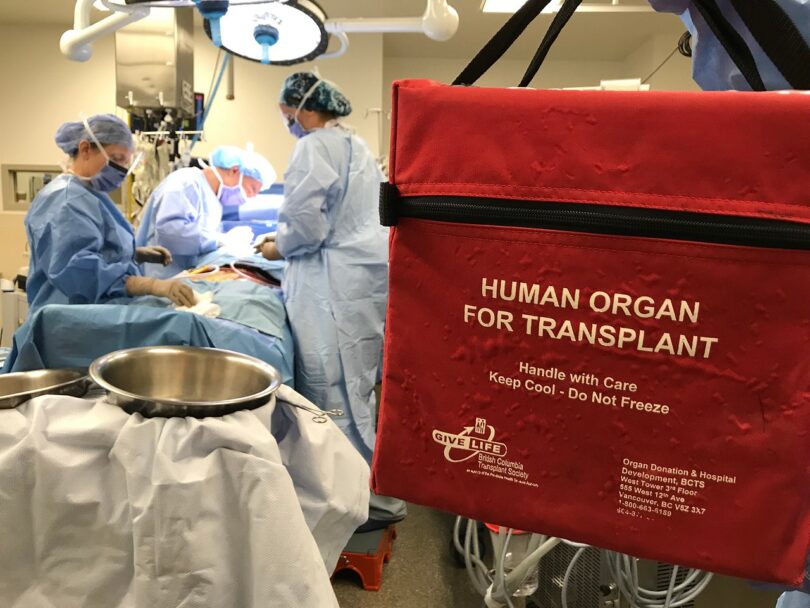
Alongside receiving a life-saving transplant, Smith made a decision that would help future patients for years to come. He donated his explanted heart to the Bruce McManus Cardiovascular Biobank (BMCB) at St. Paul’s Hospital, the largest cardiovascular biobank in Western Canada. Fifteen years later, while Smith is living a second chance at life, his heart is helping shape the future for others like him.
A decision to give back
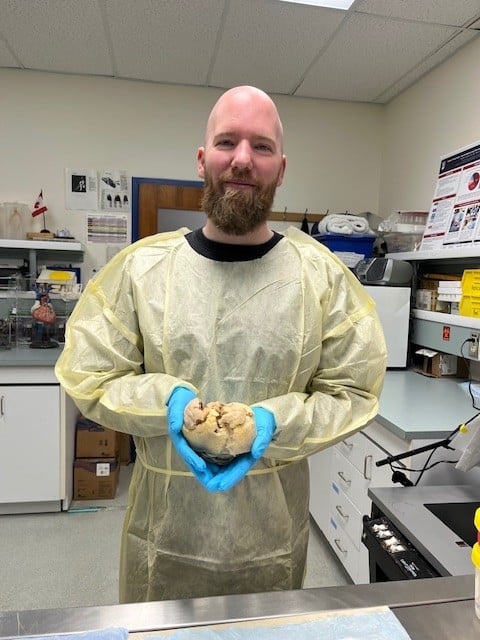
Donations like Smith’s help researchers study heart disease in ways that would otherwise not be possible.
“Having that whole heart is huge,” says Dr. Gurpreet Singhera, manager of the BMCB. “It’s like a whole world versus a petri dish.”
Unlike individual tissue samples, a whole donated heart allows researchers to study disease at every level, from changes in heart structure and blood vessels, to molecular and cellular processes. Each sample can be linked to clinical data such as imaging, treatments and patient history, providing a deeper understanding of how disease develops and progresses.
Hypertrophic cardiomyopathy is relatively uncommon in the biobank’s collection, making each sample of Smith’s donation an important opportunity for discovery.
“I remember feeling so thankful that I was able to have an opportunity like this,” says Smith. “It felt like maybe I might make change for others.”
Over the past 15 years, the BMCB has evolved. Advances in imaging, preservation and data handling mean that each donated heart can now generate more detailed insights than ever before.
Researchers are increasingly able to link tissue samples with matched blood data, opening the door to identifying biomarkers and understanding disease on a deeper level. This work has contributed to a better understanding of heart disease and transplant outcomes, helping clinicians diagnose conditions earlier, refine treatments and improve patient care.
Progress across the transplant journey
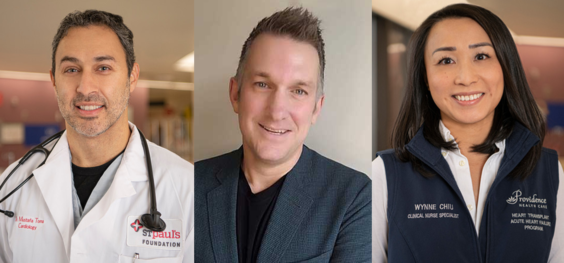
Alongside this, the field of cardiovascular disease and heart transplant research has advanced. One of the most significant changes has been a shift toward less invasive monitoring for transplant patients.
Dr. Mustafa Toma, a cardiologist specializing in advanced heart failure and transplantation at St. Paul’s Hospital who cared for Smith during his transplant journey, has focused much of his research on improving how clinicians detect and manage complications. His work additionally focuses on using data to better predict, detect and prevent complications in transplant patients.
“We want to identify patients who are at risk for developing these complications earlier, using less invasive or non-invasive techniques such as blood tests,” says Dr. Toma.
Historically, transplant recipients have required frequent heart biopsies to monitor for rejection. These procedures can be invasive, uncomfortable, and carry risk. Today, many centres use blood-based tests that can help rule out rejection, reducing the need for biopsies.
“Perhaps the biggest advancements for patients in advanced stages of heart failure have been the significant improvements in mechanical support options,” says Dr. Brian Clarke, Medical Director of the Heart Transplant Program at St. Paul’s Hospital.
Left ventricular assist devices, or LVADs, help the heart pump blood, and can stabilize patients as they wait for a transplant. Over time, these devices have become safer, more durable and easier to manage.
New medications are also helping patients live longer with heart failure before reaching the point where transplant is required.
“We’re getting a lot of patients who are living longer with their heart failure, before they enter the phase where a transplant is necessary,” says Wynne Chiu, Clinical Nurse Specialist in the Heart Failure and Transplant Program.
For those who do undergo transplant, care has become more personalized. Clinicians now have better tools and data to tailor immunosuppression – medications that help prevent organ rejections – while minimizing long-term side effects.
Advances in donor selection and organ preservation are also expanding access to transplant and improving outcomes. Together, these developments are helping patients live longer and experience a better quality of life.
A patient-centred future
Care does not end when a patient leaves the hospital. Researchers and clinicians are looking for better ways to support people through recovery and long-term care.
“The ultimate goal is patient-centred,” says Dr. Clarke. “How can we improve all aspects of care for our patients?”
Looking ahead, the field is moving toward earlier intervention, less invasive monitoring and more personalized treatment. Biobanking will continue to play an important role, providing the data and tissue needed to answer increasingly complex research questions.
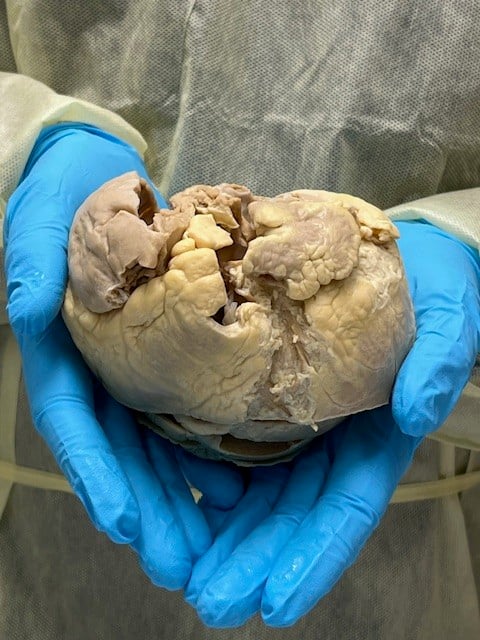
A lasting impact
Over the years, Smith has visited the biobank to see his explanted heart — first within weeks of his transplant, and most recently on the 15-year anniversary.
At first, seeing the difference between his diseased heart and a healthy one brought a sense of grief. Now, that feeling has largely been replaced by gratitude and hope.
“This organ probably has taught people a lot of things that I don’t even know exist, and that’s pretty special to me,” he says.
Smith’s journey to receiving a transplant involved extensive tests, biopsies, and heart catheterizations. To get through these challenging experiences, he framed them as ‘rites of passage.’
“Knowing that there is probably research being done on my organ, to alleviate some of those challenges for others, so that another person doesn’t have to go through those rites of passage… it’s just incredible,” says Smith.
Chiu recalls meeting Smith when he first arrived at St. Paul’s Hospital at 18 years old. He was among the first patients she cared for after joining the heart transplant program, and she was struck by his maturity, going through such an intense situation at such a young age.
After his transplant, Smith has lived a full life, including running a marathon, travelling internationally, and getting married – milestones he once never thought would be possible.
“I don’t think I ever thought there’d be a world where I had that freedom,” says Smith.
Smith’s journey, from a difficult diagnosis to a life-saving transplant and a decision to donate his heart for research, illustrates how patient contributions continue to drive medical discovery.
“We go through treatments over the years, and you have no idea where they come from,” says Smith. “But they had to start somewhere.”
Fifteen years after his transplant, Smith’s donated heart continues to help researchers answer new questions about cardiovascular disease, creating knowledge that may improve care for future patients and ensuring his gift keeps making a difference.
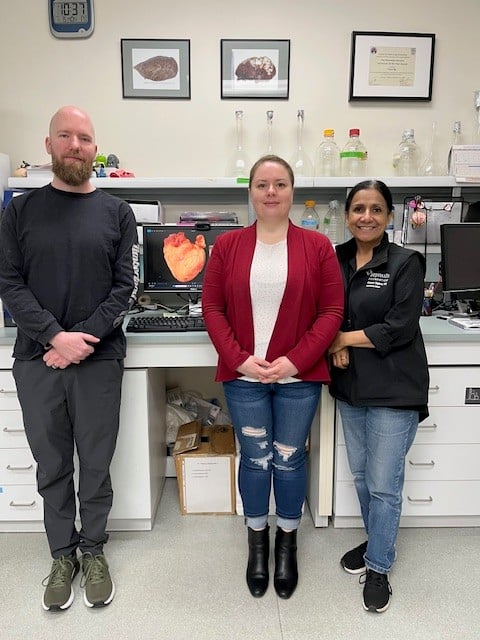
Story by Grace Jenkins, Providence Research