Providence Health Care (PHC) and St. Paul’s Hospital (SPH) play a direct role in bringing new pain care options to patients in B.C. They lead work to improve pain education in health care and help health care professionals understand how to treat and manage it, while encouraging more training so they can focus on pain care as a specialty.
Reshaping the invisible illness
Imagine every aspect of your life being dictated by ongoing, debilitating pain – pain that controls your every decision, consumes your everyday life – that is not only inadequately addressed by surgery, but is invisible, misunderstood, and underappreciated by doctors and society alike.
Pain is a pervasive, often invisible burden that poses a complex challenge in both medical and social contexts. Despite affecting millions across Canada, chronic pain is frequently misunderstood and inadequately addressed, leading to scepticism and suboptimal care.
This invisibility not only compounds physical and mental suffering but also drives dependency on opioids, underscoring the urgent need for a more effective, validated approach to chronic pain management.
Pain is a multifaceted, complex disease. For decades, chronic pain treatment has relied on an approach that layers physiotherapy, medication, and psychological support. These strategies can offer relief, but they often fall short for patients with persistent pain conditions.
When treatments fail, pain becomes harder to validate both medically and socially. Patients may seem functional, but daily life remains significantly restricted.
PHC’s role in specialized pain care
PHC and SPH lead pain care in B.C. through structured programs. Teams such as the Complex and Interventional Pain Program offer a multidisciplinary approach, including pain programs and specialized clinics that provide interventional pain management therapies and support research on pain treatment.
Specialists lead these centralized pain programs – including nurses, physicians, anaesthesiologists, psychiatrists, and physical therapists- and focus on personalized care plans, interventional treatments such as neurostimulation, and self-management strategies aimed at improving quality of life.
Against this backdrop, the latest generation of neurotechnology, specifically spinal cord stimulation (SCS), has demonstrated the potential to change chronic pain treatment and care.
At the forefront of this development is healthcare technology company Medtronic’s Inceptiv™ technology, a closed-loop SCS device that has transformed how chronic pain patterns are understood and managed.
How spinal cord stimulation works
Typically, SCS is considered after mainstream options have been exhausted. Designed for neuropathic pain conditions, including back pain, Complex Regional Pain Syndrome (CPRS), and peripheral neuropathies, SCS offers new hope when conventional therapies no longer suffice.
SCS represents a more holistic model of care. Rather than focusing solely on symptoms, it works directly on the nervous system.
A small device, implanted near the spine, delivers low-level electrical pulses to the spinal cord, interrupting pain signals before they reach the brain. The system consists of electrodes placed in the epidural section and a pulse generator implanted directly under the skin.
By altering how pain is processed, SCS does not eliminate the underlying condition, but significantly reduces pain perception and improves daily function and quality of life.
From fixed to intuitive therapy
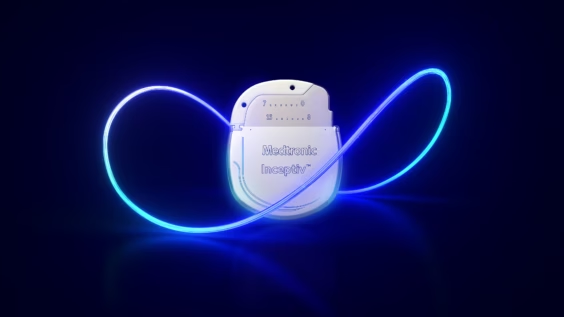
Traditional SCS systems operated in an ‘open-loop’ manner – delivering a fixed level of stimulation across body movement or physical activity; variations in both movement and activity can impact how patients ‘feel’ the stimulation.
The Inceptiv™ device is a major medical innovation: closed-loop stimulation (CLS). The latest development in the SCS system, the enhanced adaptive capability addresses one of the main limitations of open-loop devices: the need for manual adjustment and the instability of pain management across various physiological states.
A patient story from St. Paul’s Hospital
“Chronic pain is more like being sick than sore,” says B.C. resident Sean Forsberg.
The transformative effect of closed-loop SCS is best shown by patient experience. After a motorcycle accident, Forsberg lived for years with chronic pain. As the first Canadian to receive the device, he demonstrates how this innovation offers more personalized pain management.
Before the CLS technology, Forsberg’s life was dominated by persistent neuropathic pain spreading from his lower back. Exacerbated by simple actions like coughing or moving, his pain caused poor sleep, disrupted relationships, and reduced mobility. It eroded his sense of identity.
He mentioned situations where he would be sitting on the SkyTrain and society not understanding why he could not give up his seat for someone who may also have needed it, feeling unfairly judged for something he could not control, and that society could not appreciate.
He described a constant internal debate about how he had to best expend his energy – such as make dinner, or order takeout so that he could socialize, go to work, or stay home because of the pain – something that he would have had to do for the rest of his life, before receiving the implant.
Before the accident, Sean had an active youth. He was an avid rugby player, and a strong part of his identity was fuelled by being active and being able to conduct everyday functions without compromise.
After the accident, something as basic and so profound to his sense of self as being able simply to breathe without pain was gone; what he was experiencing so vividly was misunderstood and challenged by society for years.
“You become a shell of yourself,” says Forsberg.
PHC leadership in closed-loop stimulation technology
Sean stayed up to date on the latest research in chronic pain management strategies through various online chats, where he learned about the Inceptiv™ device.
After asking questions and discussing his surgery eligibility with his doctor, he became a candidate for a neuromodulation screening trial being spearheaded by the pain programs within SPH. He was given his first SCS, and while the pain did not disappear, it provided approximately 75% relief, allowing Sean to start to regain a sense of self.
As the Inaugural Chair in Pain Management at Providence Health Care (PHC), Anaesthesiologist Dr. Vishal Varshney discussed that, to be considered eligible for this particular device, patients had to have pain that has lasted longer than 6 months, have pain that persists despite conventional or pharmacological therapy, and ensure that a temporary device trial reduces pain by at least 50%.
For Dr. Varshney, while his team is working to broaden the research to incorporate other types of chronic pain, determining which patients are eligible for this permanent device must be strict. He uses the analogy “hammer for a nail, not a screw” to illustrate that different pain types require different treatments, and it is up to medical professionals to ensure that the tools patients are presented are best suited to the particular job.

In February 2025, after proving to be a successful trial participant in the screening phase, Sean became the first patient in Canada to receive a permanent closed-loop SCS, implanted at St. Paul’s Hospital.
For Sean, this device – the size of a dental floss packet – listens to his body and automatically adapts stimulation. Its rapid feedback loop provides consistent therapy as he moves through daily activities.
He reported a 70-75% decrease in nerve pain, a more than 50% reduction in back pain, and improved sleep. According to Forsberg, his pain went from being like “a fire alarm directly above me… to being outside the room, down the hall, and behind a closed door.”
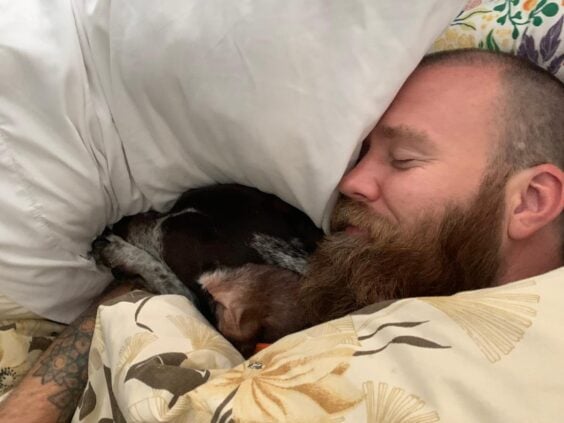
Beyond reducing physical pain, the device enabled Forsberg to regain a sense of self and to participate in daily life. With pain consistently managed to a tolerable level, he could rejoin social activities and rebuild relationships previously limited by his condition. The device’s adaptable therapy enabled him to reliably engage in life, reflecting broader benefits for his emotional well-being and social functioning.
How this impacts PHC patients
Taken together, Forsberg’s experience has broader implications. His results provide a patient-centred example of how more holistically oriented technological innovations can lead to meaningful recovery and position such strategies as a basis for future chronic pain care.
Forsberg wants to share his experience to not only inspire other chronic pain patients to ask about the surgery, but also to raise awareness about the invisible nature of the disease and to reduce misunderstandings around it.
Medtronic’s work and Forsberg’s case show chronic pain treatment must take a holistic view – measuring not just pain scores but quality of life.
Making the invisible visible
The path forward for chronic pain treatment is anchored in technological innovation and equitable access. Wider implementation of systems like CLS technology could redefine chronic pain management, understanding, and treatment.
Clinical evidence and cases like Forsberg’s demonstrate that SCS can significantly improve daily function and quality of life, highlighting the benefits of a patient-centred approach.
Inceptiv™ is not a cure for chronic pain. Outcomes vary; not all patients respond equally, and strict eligibility criteria apply. Its significance is in how CLS provides observable improvements in pain management and function, turning invisible suffering into measurable results.
Besides reducing pain, closed-loop SCS has been linked to better mobility, higher sleep quality, and greater ability to return to work and daily activities—giving patients practical and emotional improvements in daily living.
By providing consistent pain relief, closed-loop SCS devices could reduce the need for repeat interventions and healthcare use, strengthen non-medication strategies for managing chronic pain, and strengthen the global trend toward personalized, patient-centred care.
Story by Tyla Casey-Knight, Providence Research